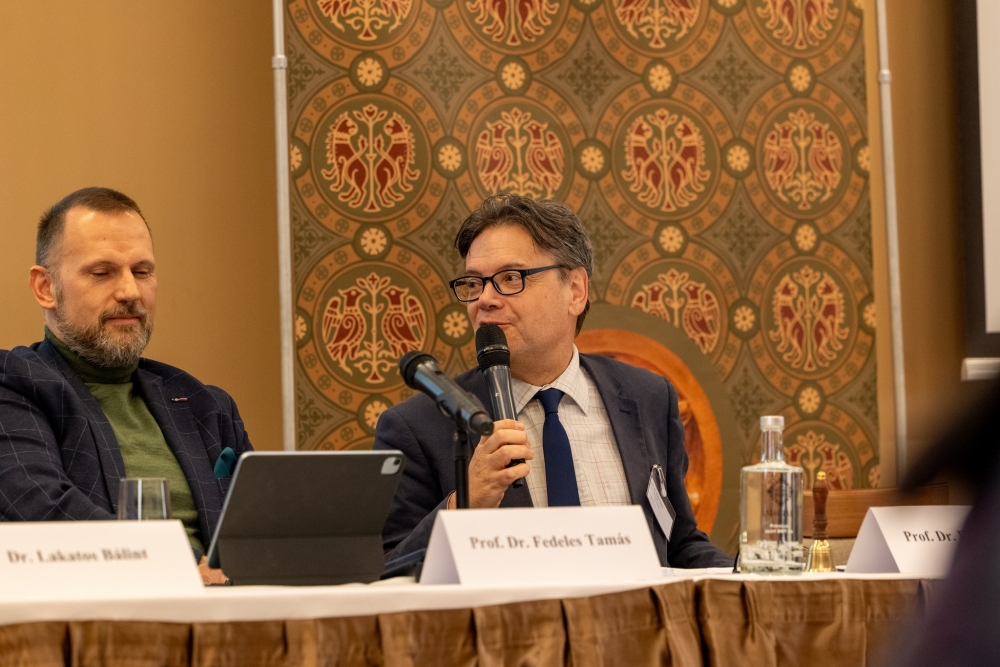
On 28–29 November 2025, an international conference entitled Mohács 500 – Antemurale Christianitatis II was held in Pécs, at the Magtár Visitor Centre.
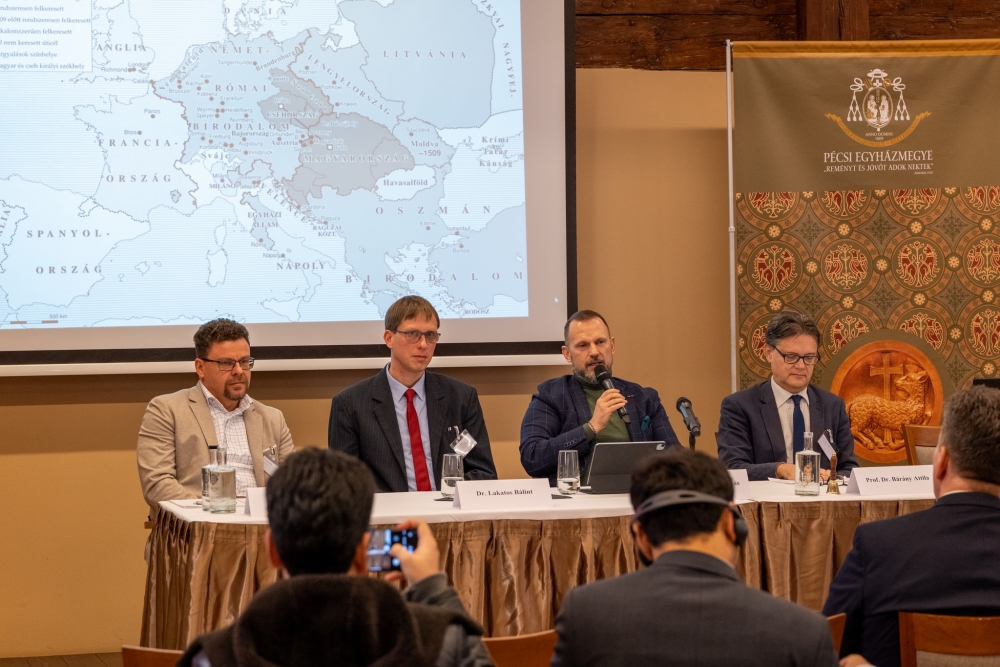
The English-language event featured presentations by Hungarian, Polish, Czech, Croatian, Italian and Romanian scholars across three panels. Between and after the panel sessions two roundtable discussions also took place: a Diplomatic Roundtable (in Hungarian) and The International Context of the Transformation of the Mohács National Memorial Site (in English). The symposium was organised by the National Institute of Heritage, with the collaboration of the Fraknói Research Group. Thanks to this cooperation, Antonín Kalous and Gianpiero Brunelli were able to participate in the scholarly meeting; both had previously visited Hungary at the Group’s invitation in 2019 and 2021 on the occasion of the presentations of their volumes La santa impresa. Le crociate del papa in Ungheria (1595-1601) and The Legation of Angelo Pecchinoli at the Court of the King of Hungary (1488–149) (CVH II/8).
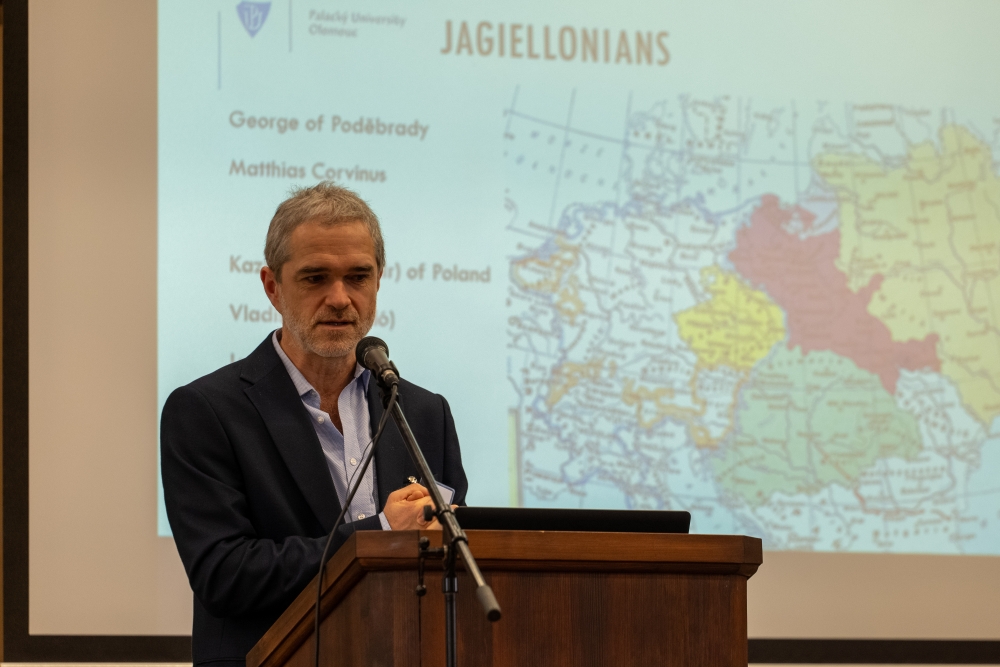
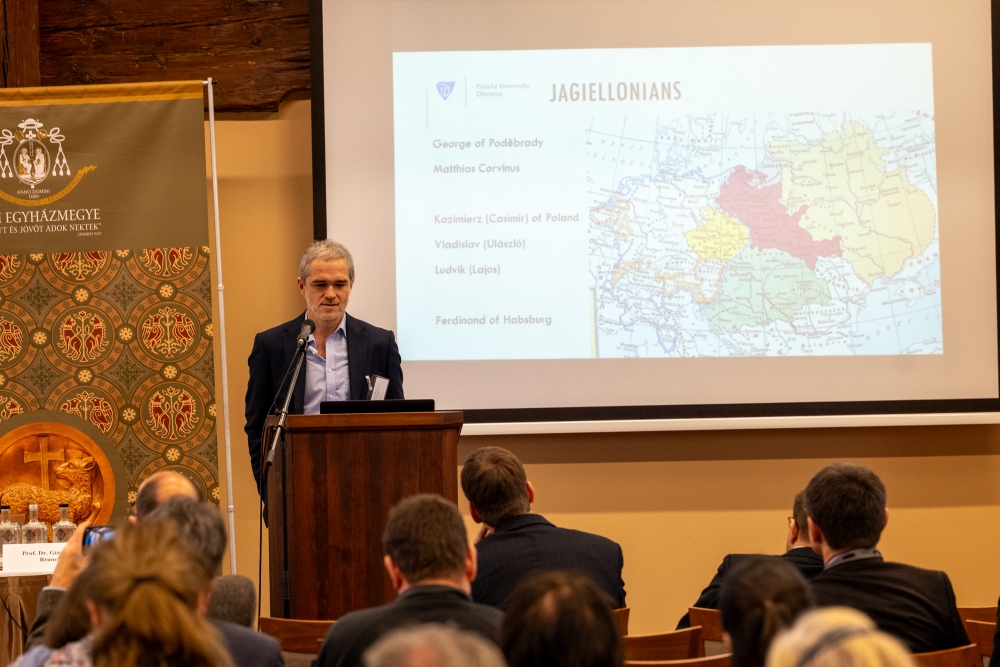
In his presentation, The Jagiellonians’ Rule in Bohemia, Antonín Kalous explored not only the often-emphasised similarities in the governance of the Jagiellonians (such as the relationship between the estates and the monarchy), but also their differences. Due to the legacy of Hussitism, the Jagiellonians in the Kingdom of Bohemia were compelled to make religious compromises in addition to political ones. These, in turn, influenced political relations and had the further consequence that Bohemia became peripheral in its relations with the Holy See. A clear indication of this marginality was that, unlike in Hungary or the Holy Roman Empire, Rome did not send separate, independent papal envoys to the kingdom.
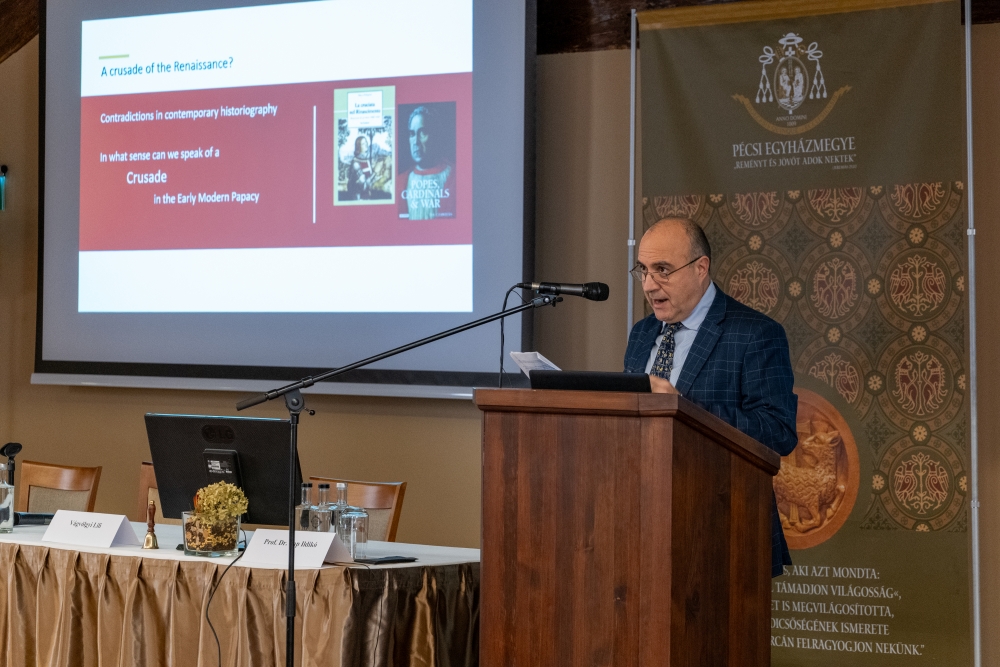
In his lecture, Crusades, Italy and Ottoman Policy, Giampiero Brunelli argued for the need to rethink the historiography concerning the topics indicated in the title. According to Brunelli, scholarship traditionally maintains that while crusading ideology survived into the fifteenth century, by the sixteenth century it had persisted merely as a rhetorical tool. This opposition—between political realism and crusading rhetoric/propaganda—is often framed from a modern, moralising perspective and tends to overemphasise national differences. However, a renewed reading of the arenga sections of papal bulls demonstrates that early modern papal political culture and action were shaped simultaneously and inseparably by theology, canon law and politics. Without the history of crusading, therefore, the history of the early modern papacy cannot be adequately understood.
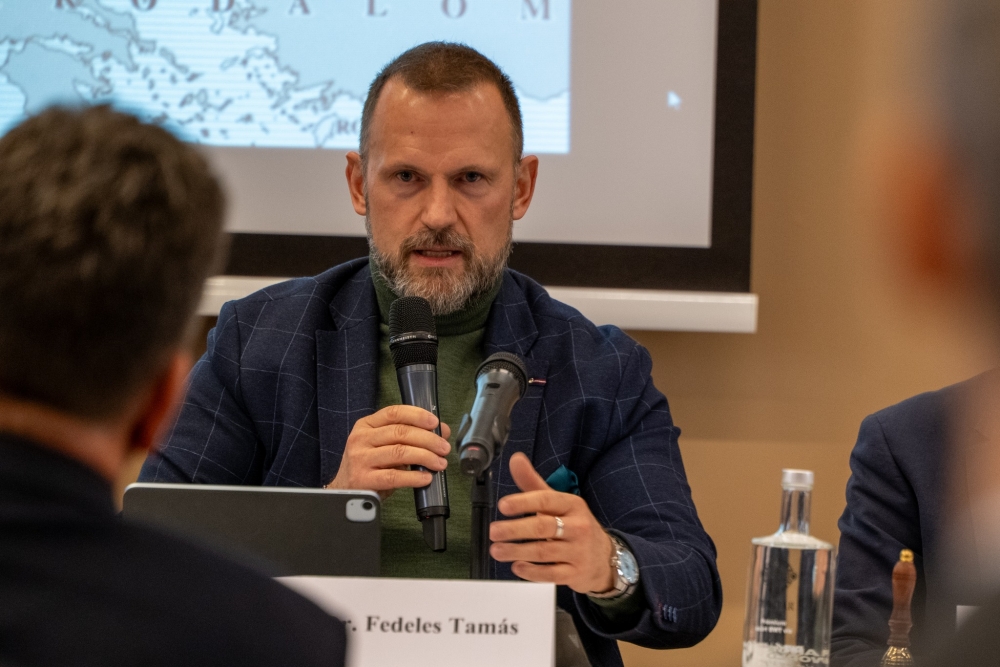
At the diplomacy roundtable, which shed light on the international relations of the period, the Fraknói Research Group was represented by Tamás Fedeles.