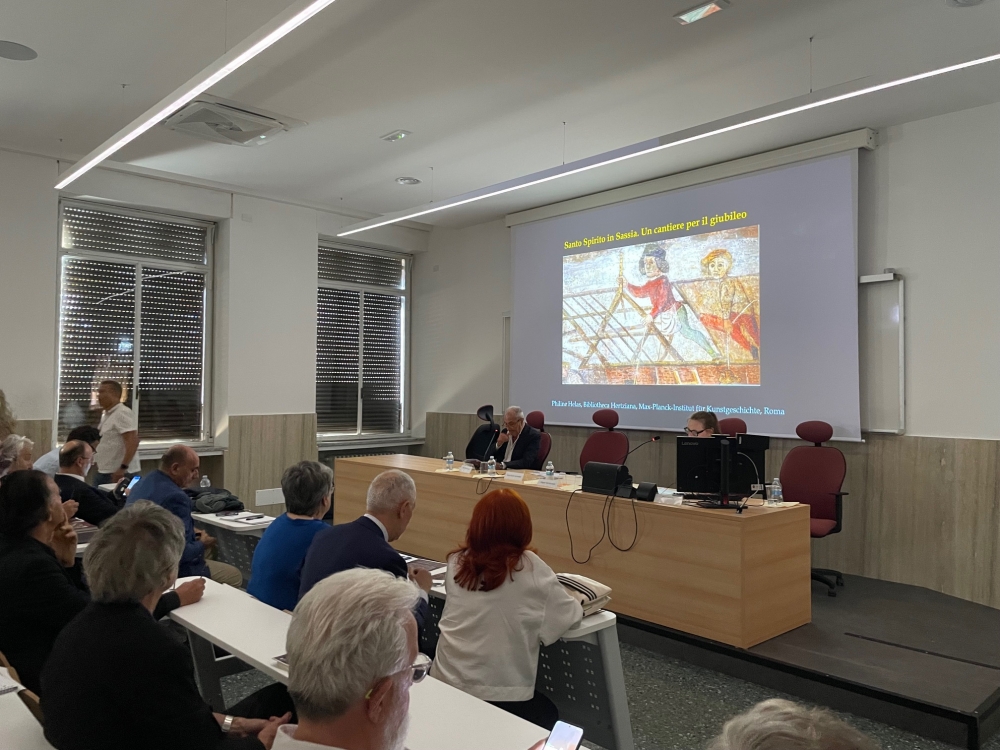
On 18–19 September 2025, the international conference “Giubileo e giubilei. Arte, mete e riti tra Roma e Santiago di Compostella” (“Jubilees and Holy Years. Art, Destinations and Rites between Rome and Santiago de Compostela”) took place at Sapienza University of Rome, Faculty of Humanities, in the “Adolfo Venturi” lecture hall. The event was jointly organised by the Embassy of Spain to the Holy See and Sapienza University, bringing together a number of renowned scholars to explore the cultural, religious, and artistic dimensions of Roman and Compostelan jubilees. The Fraknói Research Group was represented by Katalin Nagy, our Vatican archival research resident.
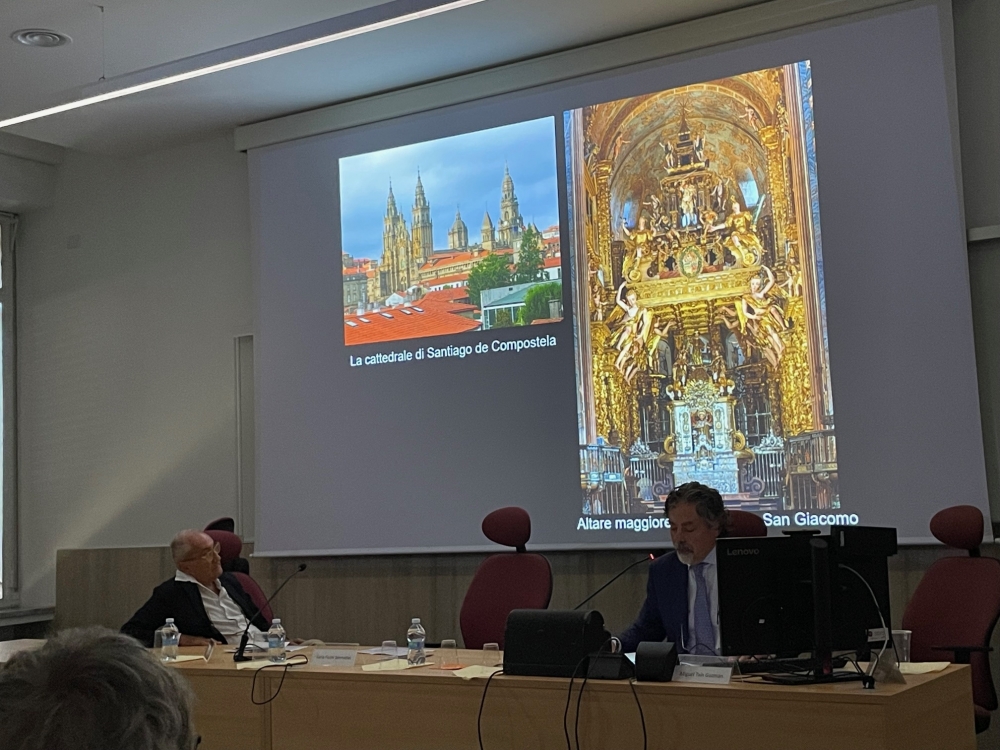
The two-day programme featured keynote lectures on the origins and theological significance of jubilees, as well as their cultural manifestations from antiquity to the twentieth century. On the first day, Sapienza researchers Marina Righetti and Gaetano Lettieri introduced the emergence of the earliest jubilees and the concept of the Holy Doors. Manuel Antonio Castiñeiras González, professor at the Autonomous University of Barcelona, presented the history of the Holy Doors in Jerusalem, Rome, and Compostela.
The second session of the conference was chaired by Paolo Caucci von Saucken (University of Perugia, Honorary President of CIECS). The lectures focused on medieval Roman pilgrimage sites, iconography, and religious narratives, with special attention to the cult of Saint James. Anna Maria D’Achille and Antonio Iacobini (Sapienza University) discussed the earliest traces of the Saint James cult in Rome. Pasquale Iacobone (Pontifical Commission for Sacred Archaeology) spoke about the Church of Saint James near the Colosseum and its wall paintings. Marco Piccat (CIECS, University of Trieste) offered a new interpretation of medieval pilgrimage literature, analysing “Eastern stories” written for Western pilgrims — including the legendary journeys of the Apostle Saint James and Saint Veronica from Asia to Europe.
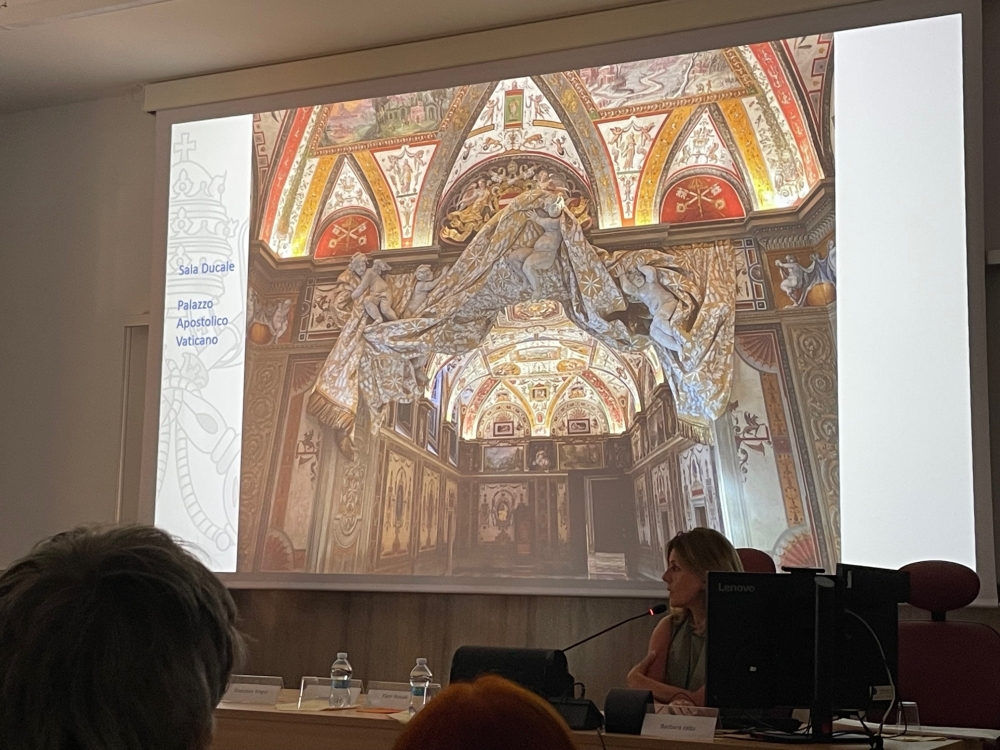
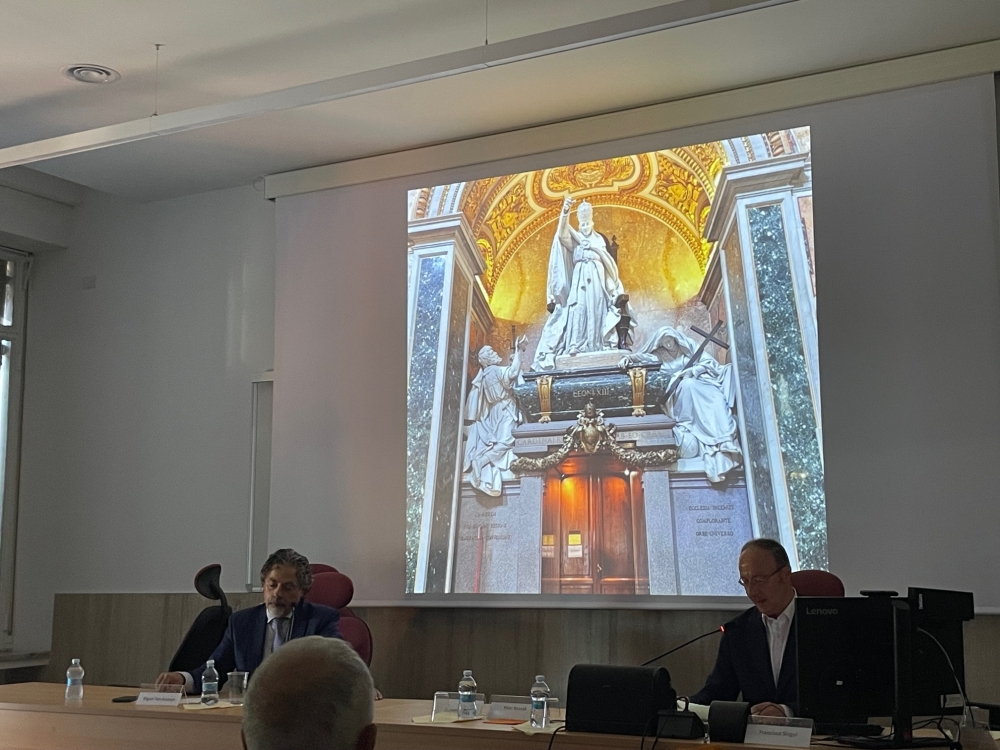
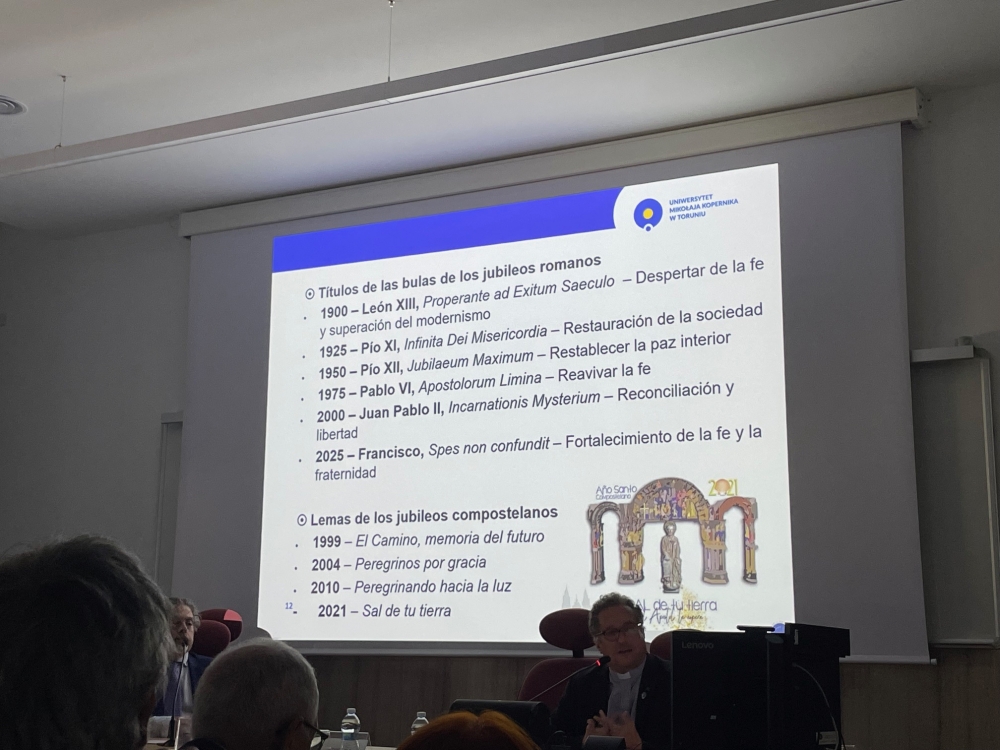
In the afternoon, the third and fourth sessions examined the cultural, artistic, and religious significance of jubilees from the Renaissance to the present day. The sessions were chaired by Mario Bevilacqua (Sapienza University) and Miguel Taín Guzmán (University of Santiago de Compostela). Philine Helas (Bibliotheca Hertziana – Max Planck Institute, Rome) analysed the history and role of the Church of Santo Spirito in Sassia, one of the most important Roman jubilee constructions, which held a special place in official ceremonies. Miguel Taín Guzmán (CIECS, University of Santiago de Compostela) presented the celebration of Holy Years in the Renaissance and Baroque periods, focusing on processions, ceremonies, and popular festivities accompanying pilgrimages — key scenes of urban religiosity and political representation. Ilaria Fiumi Sermattei (Pontifical Gregorian University, Rome) discussed the jubilees of the nineteenth century, highlighting the period’s political, social, and religious crises and the renewal efforts expressed through jubilee practices. Francisco Singul (CIECS – Xunta de Galicia) spoke about the “renaissance” of Compostelan Holy Years and pilgrimages between 1885 and 1920, showing how the Camino de Santiago experienced a revival at the dawn of modernity. Piotr Roszak (Nicolaus Copernicus University, Toruń) examined the meaning of jubilee pilgrimages in the contemporary world, interpreting pilgrimage as a spiritual and communal experience that continues to shape identities today. Giovanni Papi (Centro Studi sulla Cultura e l’Immagine di Roma) focused on the impact of twentieth-century jubilees on Roman art, demonstrating how jubilee years transformed the city’s visual and urban landscape. Barbara Jatta (Director of the Vatican Museums) presented the institution’s role in preparing for the 2025 Jubilee, emphasising the importance of cultural heritage displays and jubilee-related exhibitions.
The final session concluded with a discussion, followed by the solemn closing remarks of Manuel Antonio Castiñeiras González, who summarised the main findings of the conference and highlighted the continuing relevance of studying jubilees from historical and cultural perspectives.